Khamenei’s Gen Z? How Tehran is selling a new face of ‘resistance’
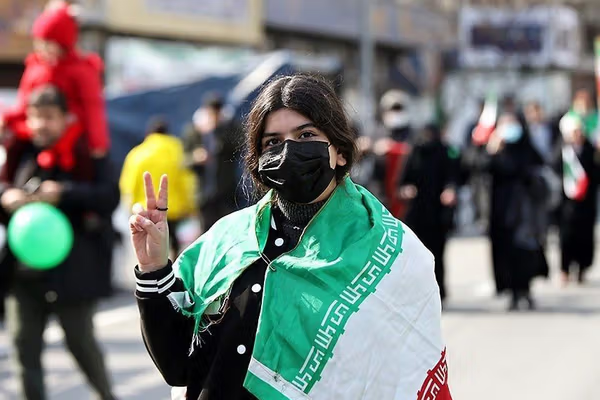
A young woman in a loosely draped hijab, strands of hair framing her face, flashes a peace sign while holding a photo of a slain Revolutionary Guard commander.
A young woman in a loosely draped hijab, strands of hair framing her face, flashes a peace sign while holding a photo of a slain Revolutionary Guard commander.
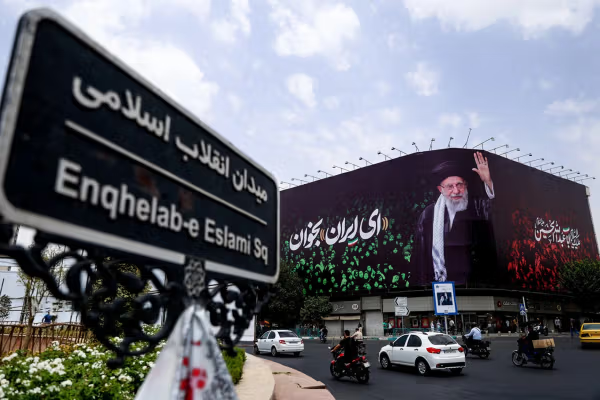
Ali Larijani’s reappointment as secretary of Iran’s Supreme National Security Council (SNSC) may appear to mark a return to moderation, but it is better understood as a tactical facelift.
Iran has established a new Defense Council under the Supreme National Security Council (SNSC), aiming to centralize military decision-making and prepare for crises ranging from war to potential leadership transition.
Veteran powerbroker Ali Larijani has been reappointed as Secretary of Iran’s Supreme National Security Council (SCNS), returning to a role from which he resigned two decades ago after clashes with ultra-hardline President Mahmoud Ahmadinejad.
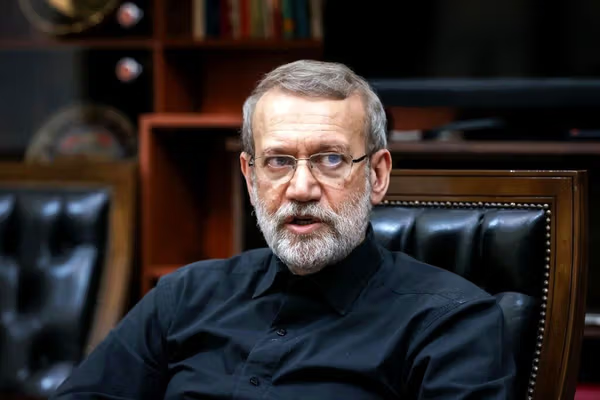
A high-profile conservative seen as close to Iran's Supreme Leader Ali Khamenei has been appointed to lead Iran’s newly revamped Supreme National Security Council, Tasnim News reported on Tuesday.
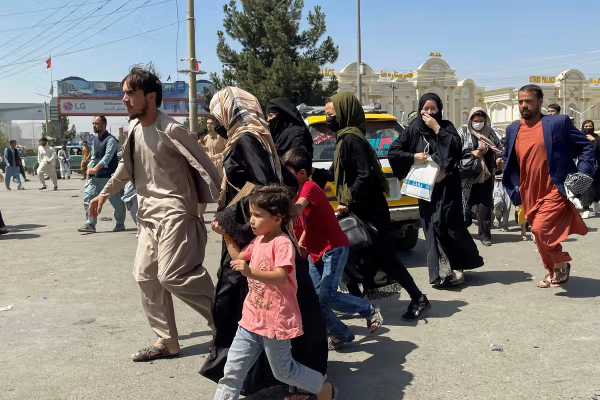
Tehran has requested the Taliban share a leaked list of Afghans who assisted British forces, including those linked to MI6, as part of a bid to identify and potentially detain some now in Iran for possible diplomatic leverage ahead of nuclear talks, The Telegraph reported.
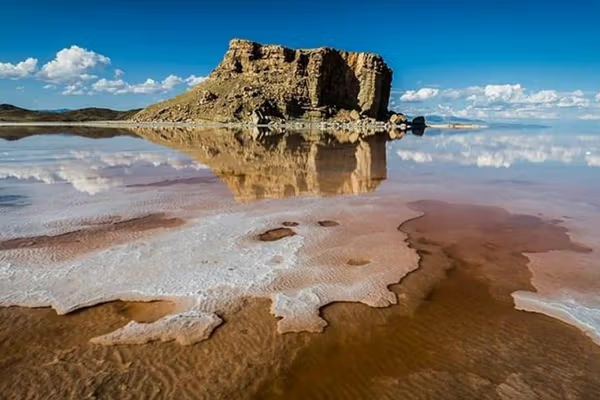
Iran’s Lake Urima, once the largest lake in the Middle East, is now all but dry, threatening mass displacement and environmental collapse amid the country’s worst drought in living memory.
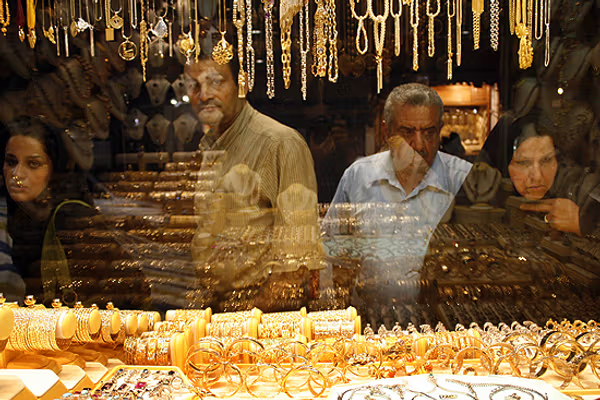
Capital flight from Iran’s stock market has intensified since the June war with Israel, with retail investors pulling half a billion dollars—much of it appearing to shift into gold or exit the country altogether.
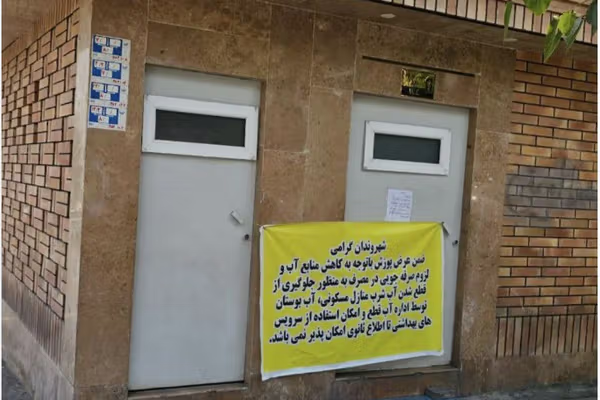
Tehran authorities closed public restroom services amid a deepening drought and water shortage, local media reported on Friday, depriving the capital's homeless and needy of badly needed facilities.
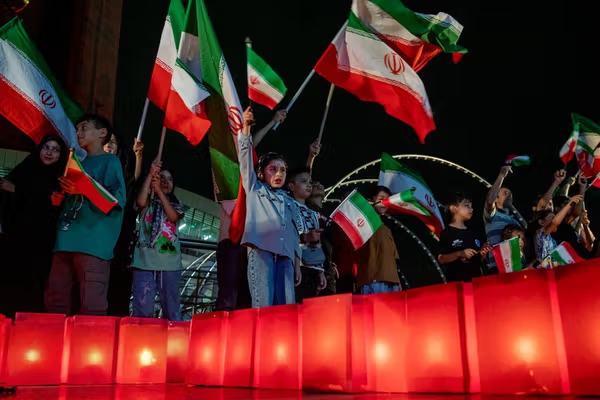
Calls for systemic reform and restructuring of Iran’s political and security institutions have intensified after a 12-day war with Israel in June, accompanied by some signs of change but also many signs of continuity.
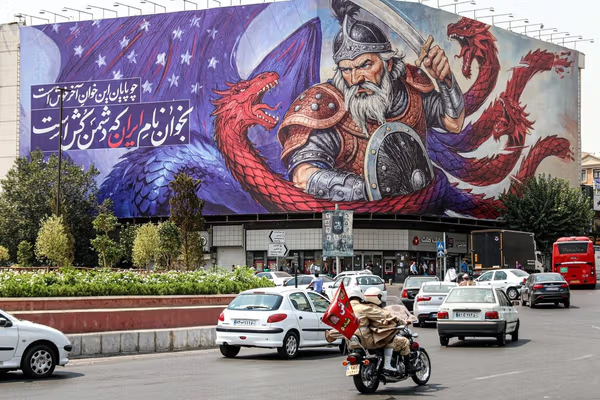
Allegations of a “shadow government” meddling in Iran’s foreign policy have reignited concerns about the country’s diplomatic direction, just as high-stakes nuclear talks with the West hang in the balance.
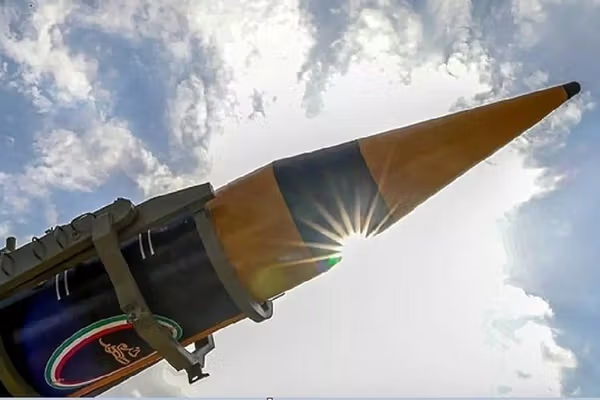
Iran's Islamic Revolutionary Guards Corps (IRGC) on Wednesday issued a cryptic warning to Israel that the geography of Tehran's response to any future attack would shift and its arch-foe would face a punishing response.
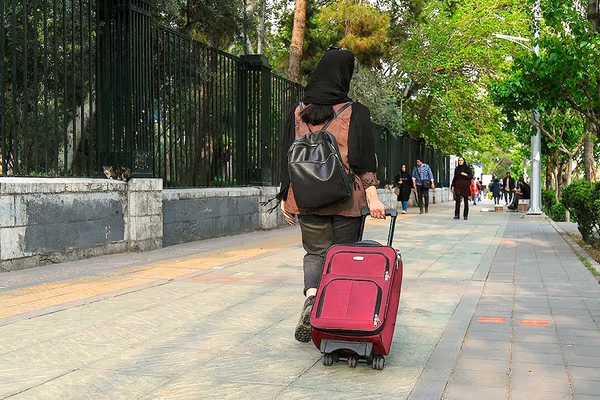
Tehran is once again urging Iranians abroad to return as part of its patriotic messaging after the war with Israel, but many remain deeply skeptical, citing years of repression, arrests and broken promises.
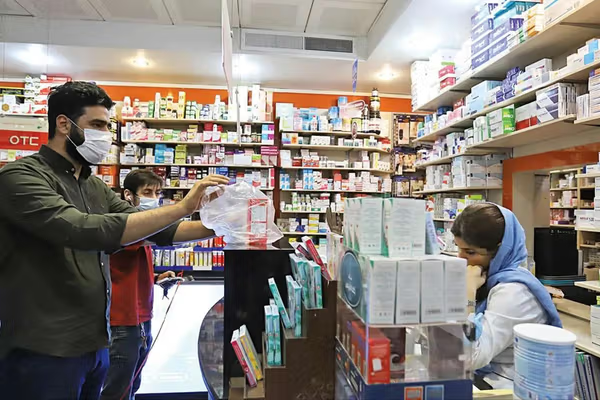
Shortages and price hikes have gripped Iran's medicine market, deepening frustration and confusion among Iranians seeking drugs, hygiene products and basic medical procedures.
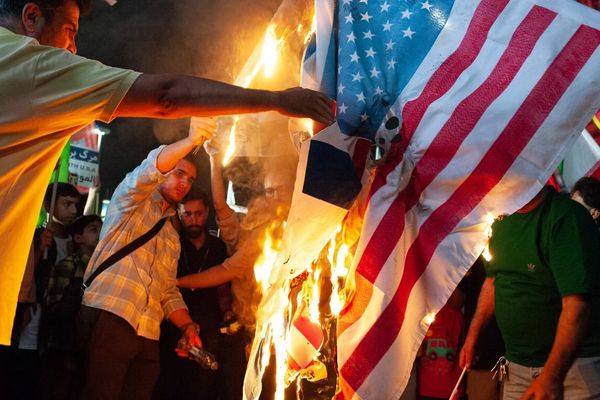
A reformist call for renewed talks with the United States as a way out of Iran’s post-war troubles has laid bare deep divisions within the Islamic Republic, with hardliners accusing the letter’s authors of treason and appeasement.

Iranian social media users have reported facing disconnection of their phone SIM cards and receiving what appear to be official conditions for regaining access including posting praise of the ruling system on social media.
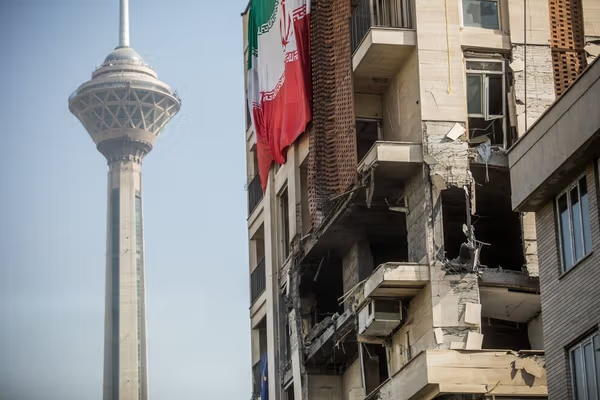
A 12-day war with Israel has ushered Iran into a new phase where crisis is no longer episodic but structural—an unstable order held together by instability itself.
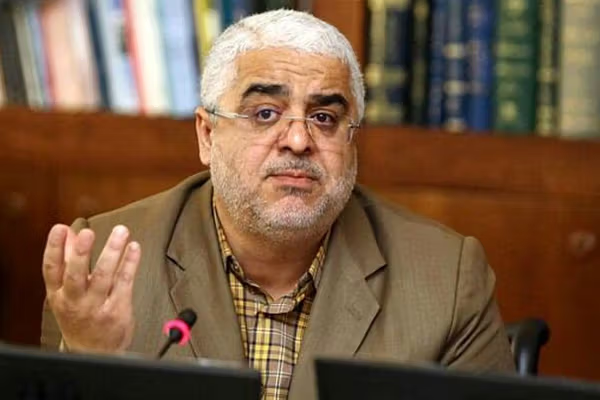
A former Iranian lawmaker has launched a blistering attack on the country’s intelligence agencies, accusing them of catastrophic failure in the face of Israel’s military strikes in June that killed dozens of Iranian commanders.
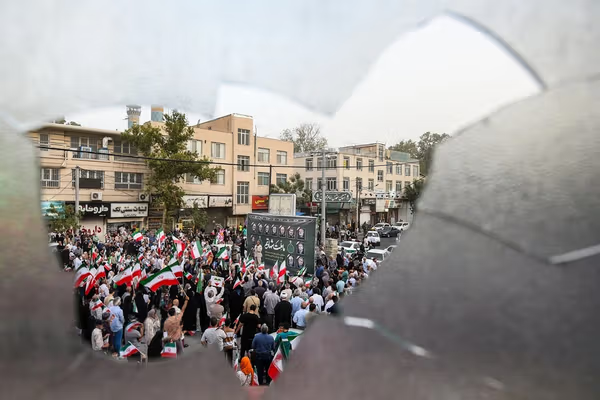
The legacy of a 12-day war with Israel which ended last month will likely be yet more economic hardship, deteriorating living standards and intensifying public distrust.
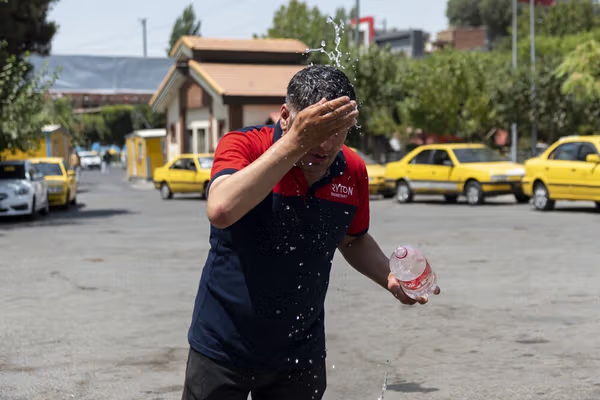
Iranians are speaking out with increasing urgency over chronic water and electricity outages that upend daily life and fuel fury at the government.
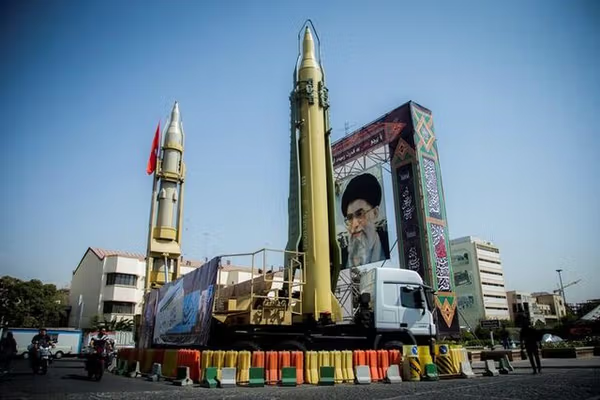
Israel caused over 100 Iranian missile launchers to explode upon activation during the war last month, an Iranian analyst alleged in a newspaper interview, adding that the country’s entire air defense system was hacked by Israel.
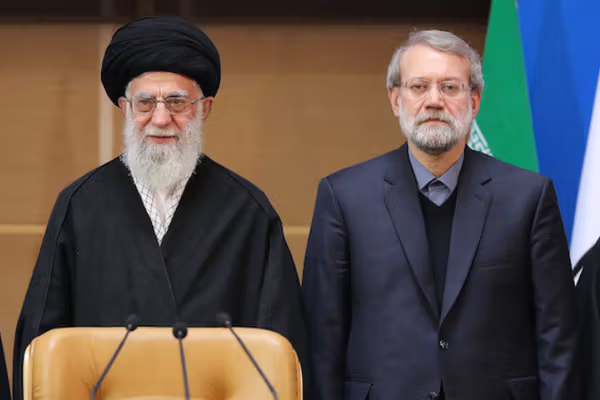
A surprise Moscow visit by a senior adviser to Iran’s supreme leader on the eve of a joint military drill has stoked discussion about Tehran’s internal calculations and shifting foreign policy posture.